Knowledge · 8 min read · NakedWill
Naturism, body image and self-esteem: what the research actually says
Naturists claim being naked around other people improves how you feel about your body. There is now real research on that claim. Here is what it found, how strong the evidence is, and where it stops.
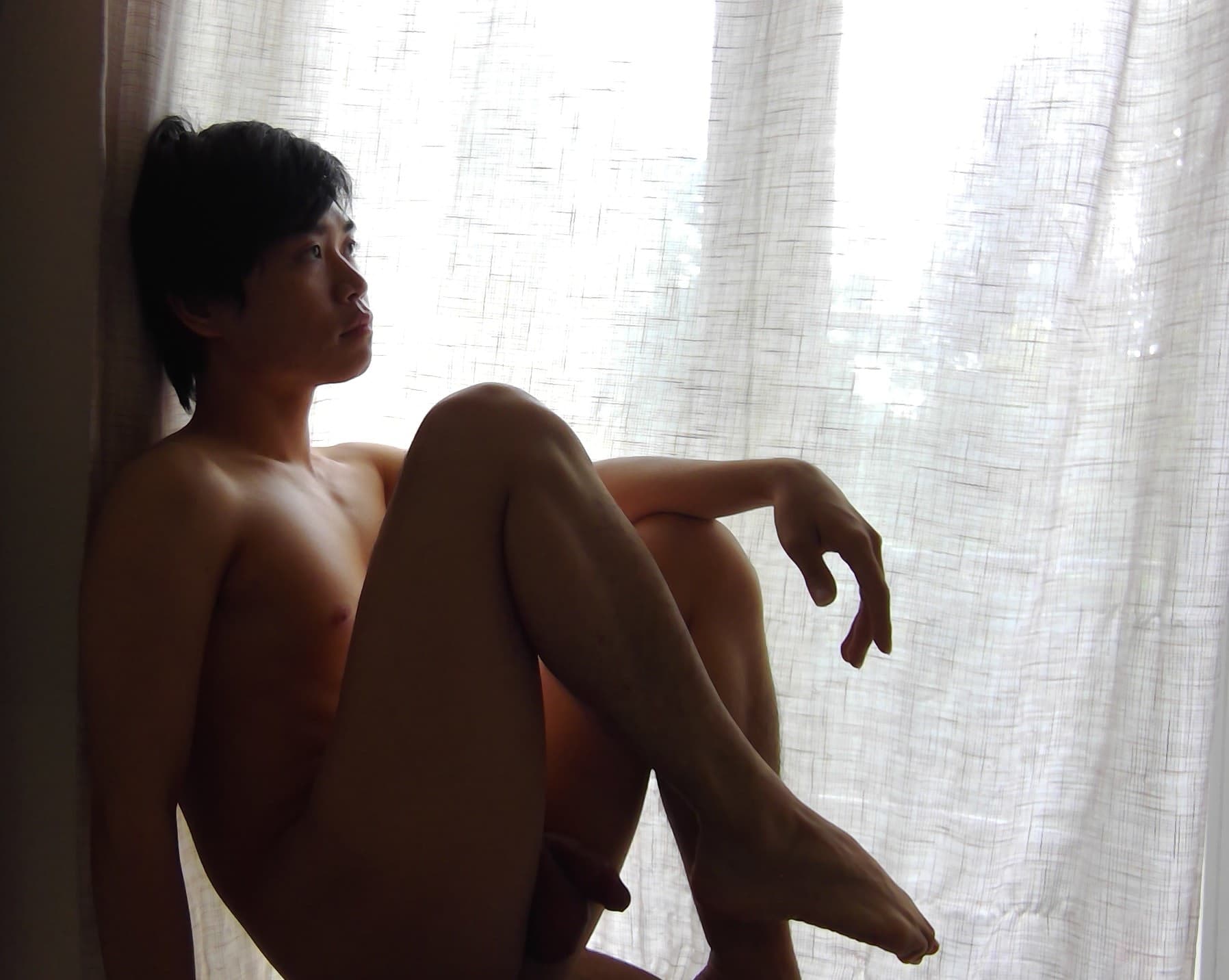
Every naturist eventually says some version of this sentence: being naked around other people made me feel better about my body.
I have said it. I believe it about myself. But I have also spent enough time on the internet to know that "it worked for me" is the weakest kind of evidence there is, and that a movement built entirely on personal testimony is one bad journalist away from looking like a cult.
So I went and read the research. Not the blog posts quoting the research — the actual studies. Some of it is better than I expected. Some of it is much thinner than naturists like to pretend. This is what I found.
First, the problem the claim is trying to solve
Body dissatisfaction is not a niche complaint. It is closer to a baseline condition.
One study of adolescent body image found roughly 56% of girls and 43% of boys were dissatisfied with their bodies (Eat Behav, 2014). Not clinically ill — just walking around not liking the body they live in. Research on weight-based teasing links it to depression, low self-esteem and disordered eating (Puhl, 2013). Work on adolescent health has connected body satisfaction to broader wellbeing outcomes (Liechty, 2010; Al Sabbah, 2009).
And the media exposure literature is about as settled as social science gets. A meta-analysis of experimental and correlational work found consistent links between exposure to thin-ideal media and body dissatisfaction in women (Grabe, 2008). Similar effects have been shown for men exposed to muscular ideals (Agliata & Tantleff-Dunn, 2004).
So the thing naturism claims to help with is real, common, and measurably harmful. That matters, because it means the claim is worth testing properly rather than just repeating.
What the research on naturism actually found
The most useful work here is by Keon West, a social psychologist at Goldsmiths. His 2017 paper in the Journal of Happiness Studies is the one worth knowing about.
West ran several studies. A survey design found that more naturist participation was associated with more positive body image, and that better body image was in turn associated with higher life satisfaction. Then — and this is the part that makes it interesting — he ran experimental work, randomly assigning people to naturist activity rather than just asking existing naturists how they feel.
That design distinction is the whole ballgame. If you only survey naturists, you cannot tell whether nudity improves body image or whether people who already feel fine about their bodies are the ones who take their clothes off. The experimental element is what lets you argue direction rather than just correlation.
The reported effects were positive: participants showed improvements in body image and self-esteem after nonsexual communal nudity.
There is also historical and cultural literature — Ungewitter's early German naturist writing from 1913, work on European naturist movements (Landry, 2010; Stewart, 2015), and a French dermatology paper on naturist populations (Villaret, 2012). And there is a 1966 psychiatric study of nudist participants (Oleinick, Arch Gen Psychiatry) which is mostly interesting now as a period document — it tells you more about 1960s psychiatry than about nudists.
Now the honest part: how strong is this?
If I only told you the paragraph above, I would be doing the thing I dislike about wellness writing.
So: the evidence base is small. It is a handful of studies, substantially from one research group. Sample sizes are modest. The effects are self-reported, which is exactly where you would expect demand characteristics — people who just did something unusual and social tend to report feeling good about it. Follow-up periods are short, so we genuinely do not know whether an afternoon at a naturist beach changes anything a month later. And publication incentives being what they are, a null result on "does being naked make you happy" is a harder paper to place.
What I would say honestly is this: the direction of the evidence supports the claim, and the quality of the evidence does not yet support certainty. That is a much less exciting sentence than the ones in naturist marketing, and it is the accurate one.
If someone tells you naturism is a clinically proven treatment for body dissatisfaction, they are overselling. If someone tells you there is no evidence at all, they have not looked.
Why it might work, mechanically
The research says something happens. It is less specific about why. Here is my reading, flagged clearly as interpretation.
You get a corrected reference sample. Nearly every body you have ever seen naked came from pornography, advertising, or a mirror you were already unhappy with. That is a catastrophically biased dataset. A naturist beach gives you sixty unedited bodies in an afternoon — sagging, scarred, hairy, asymmetric, pregnant, elderly, post-surgical. Your sense of "normal" moves, because for the first time it is built on data instead of media.
The catastrophe fails to happen. Most body shame runs on a prediction: if people saw this, something terrible would occur. You cannot argue your way out of that. You can only test it. When you take your clothes off and the prediction simply does not come true — nobody looks, nobody comments, someone asks whether you want a drink — the belief loses its grip. This is broadly how exposure works for other anxieties too.
The evaluation frame switches off. Clothing is status. It signals money, taste, subculture, effort. Remove it from everybody at once and a surprising amount of social ranking has nothing left to attach to.
Where it does not work, and who should be careful
This is the section naturist writing usually skips, so I want to be direct.
Communal nudity is not a treatment for body dysmorphic disorder or an eating disorder. For some people, the intense body-comparison environment is actively the wrong place to be, and "just get naked and you'll feel better" is careless advice to hand someone in that position. If that is you, this should happen alongside a professional who knows your history, not instead of one.
It also does not work as a single dramatic gesture. The people I know who got something lasting out of naturism got it from repetition — enough ordinary, boring, non-eventful exposure that nudity stopped being an event.
And it does not work if you are doing it to be seen. That is a different activity with a different motive, and conflating the two is precisely why naturists are so often misread. I have written about that boundary separately.
One more, on the culture rather than the evidence: naturist spaces are not automatically kind. They can carry their own hierarchies — age, body type, who is presumed to belong. The research measures nudity. It does not measure whether the particular room you walked into is welcoming.
What I would actually tell someone
If you are curious, the evidence is good enough to justify trying it and not good enough to justify promising you anything.
Go somewhere established with rules and other people. Go expecting boredom rather than transformation — boredom is the point, and it is the sign it is working. Give it more than one visit, because the first time you will be too busy being self-conscious to notice anything. And if you have a history of disordered eating or body dysmorphia, talk to someone qualified first.
What I can tell you from my own experience, which is worth exactly as much as any other single anecdote: it did not make me love my body. It made me stop thinking about it so much. Those are different outcomes, and the second one turned out to be the one I actually wanted.
I am not a psychologist or a clinician. This is a summary of published research by someone who reads it carefully, not medical advice. If body image is seriously affecting your life, please talk to a qualified professional.
References
- West, K. (2017). Naked and Unashamed: Investigations and Applications of the Effects of Naturist Activities on Body Image, Self-Esteem, and Life Satisfaction. Journal of Happiness Studies, 19(3), 677–697.
- Grabe, S., Ward, L. M. & Hyde, J. S. (2008). The role of the media in body image concerns among women. Psychological Bulletin, 134(3), 460–476.
- Agliata, D. & Tantleff-Dunn, S. (2004). The impact of media exposure on males' body image.
- Puhl, R. et al. (2013). Weight-based victimization. International Journal of Obesity, 37(6), 774–782.
- Tiggemann, M. & Slater, A. (2013). NetGirls: The internet, Facebook, and body image. International Journal of Eating Disorders, 46, 630–633.
- Liechty, J. M. (2010). Body image distortion and three types of weight loss behaviors. Journal of Adolescent Health, 47(2), 176–182.
- Al Sabbah, H. et al. (2009). Body weight dissatisfaction and communication with parents. BMC Public Health, 9(1).
- Culbert, K. M. et al. (2015). Research review: What we have learned about the causes of eating disorders. Journal of Child Psychology and Psychiatry, 56(11), 1141–1164.
- Abraczinskas, M. et al. (2012). Family weight talk and dieting. Body Image, 9, 93–100.
- Villaret, A. et al. (2012). Study of a naturist population. Annales de Dermatologie et de Vénéréologie, 139(10), 686–690.
- Landry, M. (2010). Naturism and social change in Europe. Contemporary European History, 19, 83–93.
- Oleinick, M. et al. (1966). Early socialization experiences and intrafamilial environment. Archives of General Psychiatry, 15(4), 344–353.
- Ungewitter, R. (1913). Die Nacktheit.