Advocacy and Education · 5 min read · NakedWill
Banned, age-gated, demonetised: what platforms actually do to nonsexual nudity
Naturist content does not usually get banned outright. It gets quietly age-gated and demonetised until it disappears. Here is the mechanism, why appeals rarely work, and what actually survives.
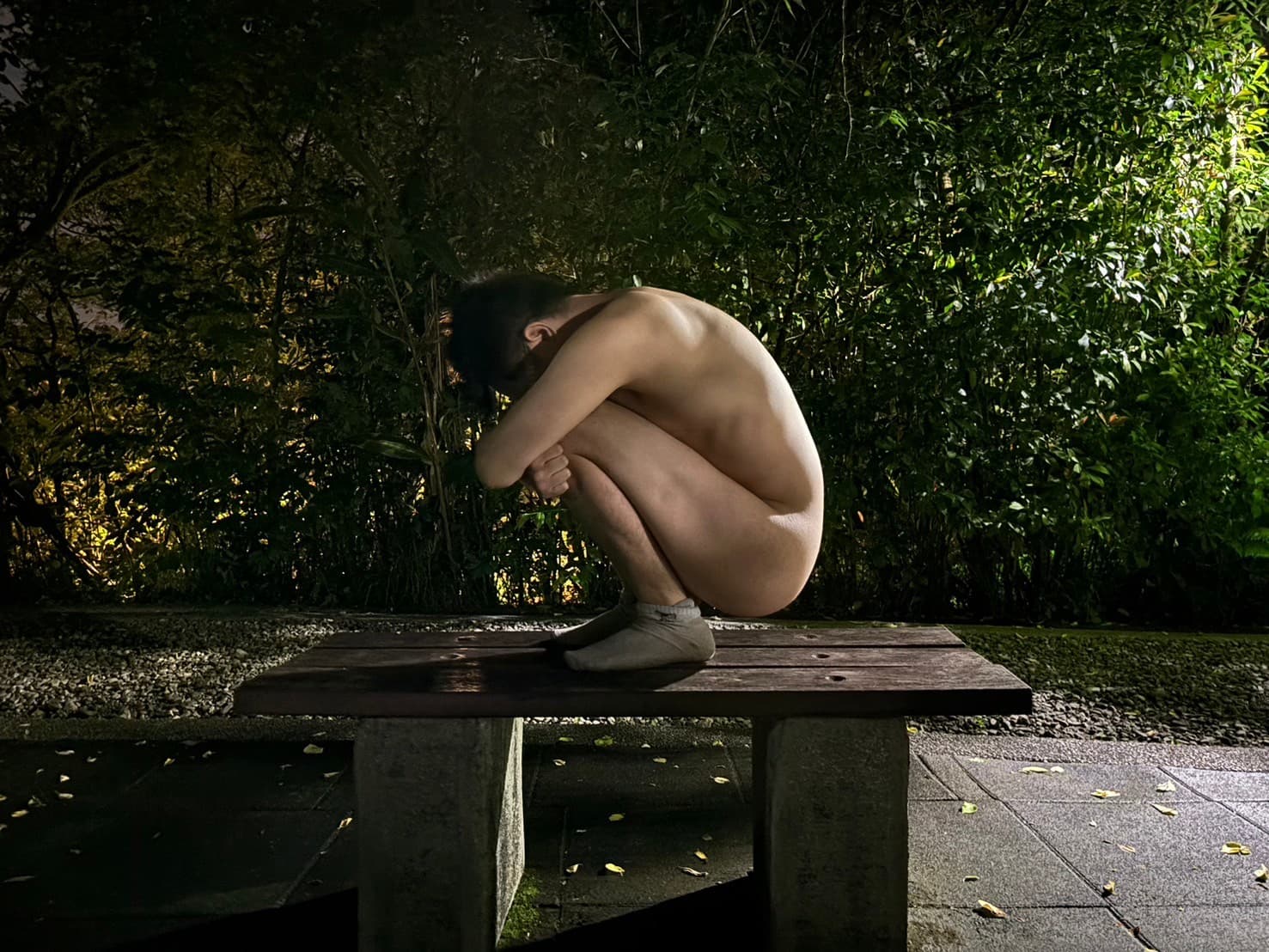
In 1948, a hospital in Wakefield had a mascot. A chimpanzee-shaped figure called Mr. Cig, photographed with a cigarette, used in materials at Pinderfields General Hospital. A hospital. Promoting smoking. Nobody flagged it, because nothing in the culture said it needed flagging.
I keep that image around because it is a compact argument about how content standards work. They are not a discovery of what is harmful. They are a snapshot of what a particular moment found unremarkable. A hospital could put a cigarette in an animal's mouth and that was fine, and today a photograph of a middle-aged man standing in a forest with no clothes on cannot be monetised on the same internet that hosts endless footage of people being hurt.
I am not claiming those two things are equivalent. I am pointing out that neither ranking came from evidence.
What actually happens — the mechanism
Naturist content is rarely banned in a single dramatic act. What happens is quieter and more effective.
The classifier sees skin, not intent. Automated moderation is pattern-matching on pixels. It cannot read context, and context is the entire distinction between a naturist essay and pornography. A body in a forest and a body in a porn scene share most of their visual features. The machine is not being malicious; it is being incapable, at scale, in one direction.
Age restriction arrives before any human looks. Your video gets restricted. It leaves recommendations. It stops being served to logged-out viewers. Nobody has accused you of anything.
Then the age restriction becomes the evidence. Restricted content is limited or excluded from advertising. So the video earns nothing. And because it earns nothing and reaches nobody, it looks like content nobody wanted — which the system reads as confirmation that restricting it was correct. The restriction manufactures the proof that justifies the restriction. That is the trap, and it is airtight from the inside.
The appeal economics are asymmetric. A wrongly-restricted naturist video costs the platform nothing. A wrongly-approved explicit video costs it advertisers and headlines. Given that asymmetry, any rational moderation system over-restricts. Appeals are not a level playing field, they are a request for an exception to a policy that is working as designed.
Flags ratchet. Enough flags and the account, not the video, becomes the unit of suspicion. Then everything you post starts life under a cloud, including the entirely uncontroversial things.
The part that annoys me most
The rules are not applied consistently, and the inconsistency is not random — it tracks commercial value.
Nudity in a prestige television series is art. Nudity in a fashion campaign is culture. Nudity on a beach in a documentary is anthropology. The same nudity from an individual with no institution behind them is a policy violation.
The operative variable is not the body. It is whether there is a legal department attached to it.
What actually survives
After enough years of this, here is what I have learned works. None of it is satisfying.
Own the destination. A site you control cannot be demonetised by someone else's policy update. Platforms are for discovery, not for storage. Anything you cannot afford to lose should not live only on someone else's server.
Text is dramatically more durable than video. This is the single most useful thing I know. Classifiers hunt images. An essay making the same argument travels further, lasts longer, gets indexed, and does not get age-gated. If your work is being suppressed visually, write it.
Lead with context, in the first few seconds and in the metadata. It will not persuade a classifier, but it matters for the human reviewer you occasionally get, and it matters for viewers deciding whether to flag you.
Keep an archive off-platform. Assume any account can vanish without warning or explanation, because it can, and there is no appeal process worth the name for account-level deletion.
Diversify the doorway, not just the content. Email lists are unglamorous and they are the only channel nobody can revoke.
Do not build a business on a policy you did not write. I learned this expensively.
What I would actually ask platforms for
Not deregulation. I have no interest in arguing that nudity should be unrestricted everywhere.
What I want is narrower:
- Distinguish sexual from nonsexual nudity in policy language. Most platforms already claim to do this. Almost none do it in enforcement.
- Make age restriction and demonetisation independent decisions. Restricting who sees something and destroying its economics are different judgements, and fusing them is what kills whole categories of legitimate work.
- Tell people which rule they broke. "Community guidelines" is not an explanation, and without specificity you cannot comply even if you want to.
- Let a human see the appeal within a useful timeframe. Two weeks is a full lifecycle for a video.
- Apply the standard to institutions and individuals alike. Either the nudity is the problem or it is not.
Why I keep doing it anyway
Because the alternative is agreeing that ordinary bodies are obscene in exchange for reach, and that is the actual thing being sold.
And because the standard does move. Mr. Cig was uncontroversial in 1948 and would end a career now. Bodies were unremarkable in a great many cultures before they were obscene in this one. The line moves when people keep standing on the far side of it and behaving unremarkably.
That is a slow mechanism and it is the only one I have got.
This is advocacy writing from the nonsexual side of my work. I am describing moderation as I have experienced it as a naturist creator, not making legal claims about any specific company's policies.